The Mansion
THE HISTORIC LUCKNOW MANSION
Start your journey to the historic Lucknow mansion as you travel by trolley along the same road that Thomas & Olive Plant traveled on back in the early 1900s.
Before you tour the Lucknow Mansion, you will receive a brief orientation. Learn about Thomas Plant’s rise from working-class to great wealth, as well as the history of the Arts & Crafts-style building.
After the orientation, visitors are welcome to explore the mansion at their leisure on a self-guided tour. Pick up a floor plan, and learn more about important features such as the central vacuuming system and needle showers. Special activities are available to children as an educational and exciting way to discover the mansion. See everything vintage from the clothes in the closets to the innovative electrical fixtures. Step out onto the terrace lawn and stroll through the gardens.
Please note that access to the second floor requires navigating stairs. A video tour of this space is available to any guest who wishes to view it. Just ask one of our friendly Museum Interpreters!
TOP
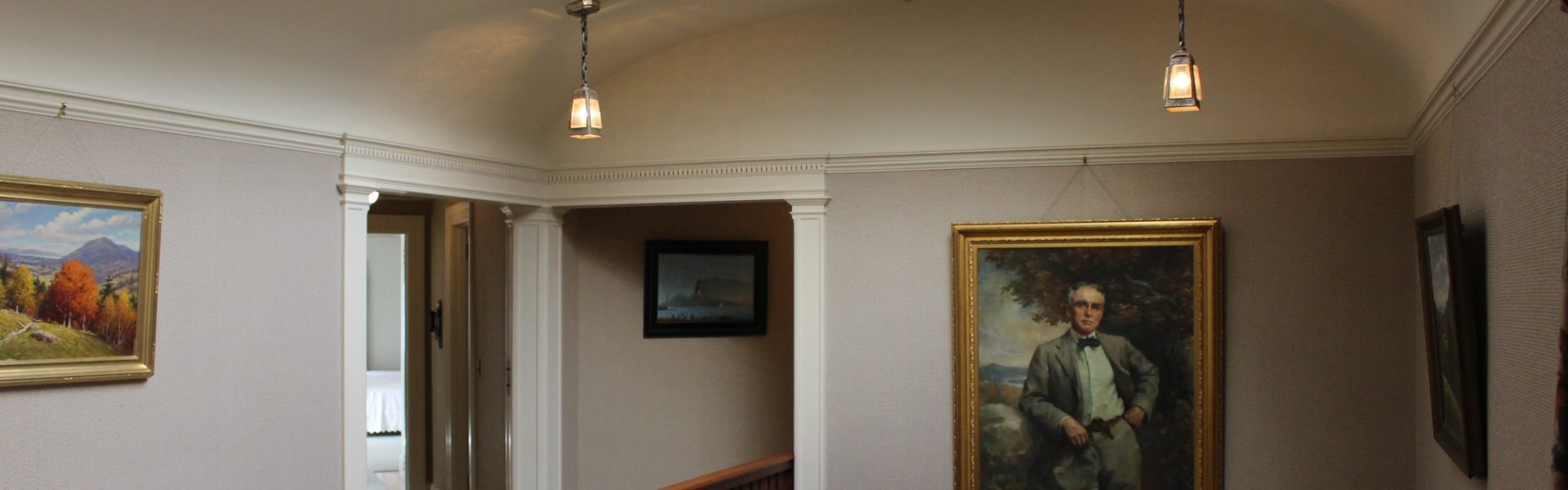
main hall (left)
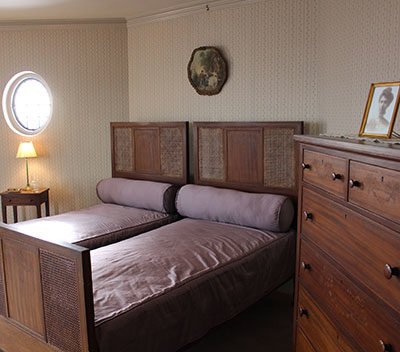
master bedroom (right)
MIDDLE
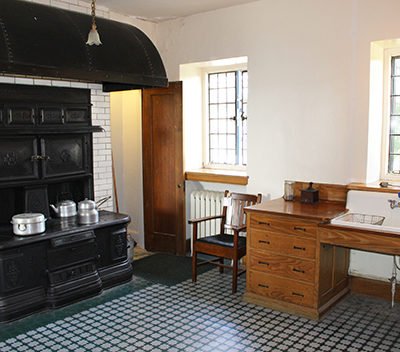
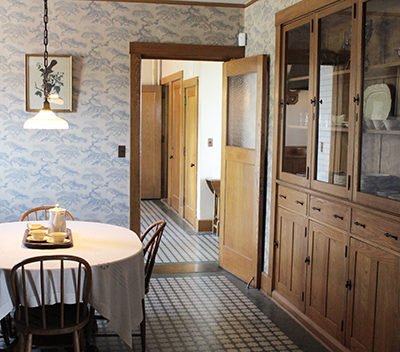
kitchen
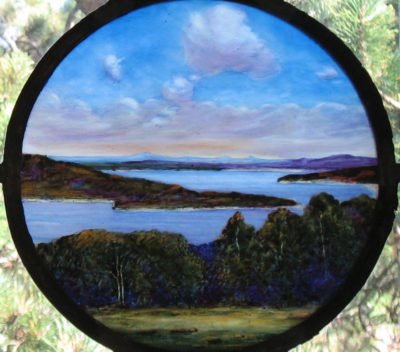
lake roundel – stained glass
BOTTOM
servants dining area (left)
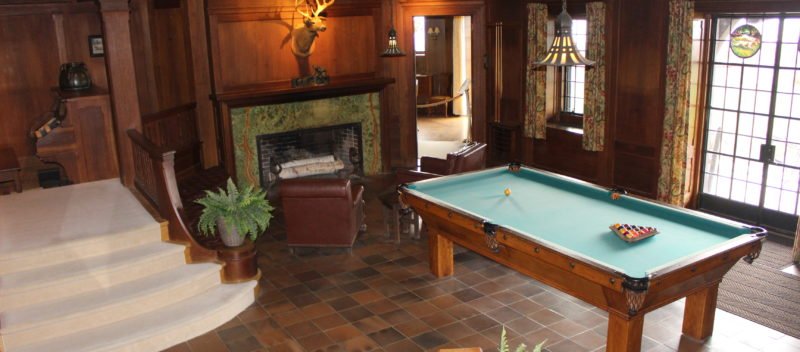
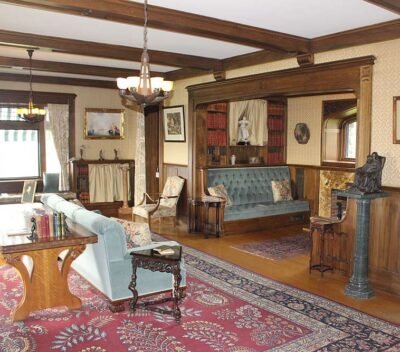
library (right)
The interior of the house is most livable with its air of restfulness and home comfort. It is rich without looking costly, simple, yet beautiful and artistic…
THOMAS G. PLANT / 1924
HISTORY NOTES
Thomas Plant once said that his choice of location for his country estate Lucknow was greatly influenced by his niece Amy, who was particularly fond of the exquisite natural beauty of “Ossipee Mountain Park” in New Hampshire.
Once the Plants had purchased their property, they worked with Boston architects J. Williams Beal & Sons to design the mansion, stables, gatehouses, and farm buildings on their 6,300 acres.
Thomas Plant and his wife Olive Dewey Plant would enjoy 27 years here.
Building Lucknow would require unique architectural design, smart engineering, an awesome amount of manpower, and a vast amount of money.
Thomas Plant wrote that he spent upwards of one million dollars to build his dream home (which would be roughly $25,000,000 in today’s money).