National Historic Landmark
Lucknow Estate Designated New Hampshire’s 24th National Historic Landmark
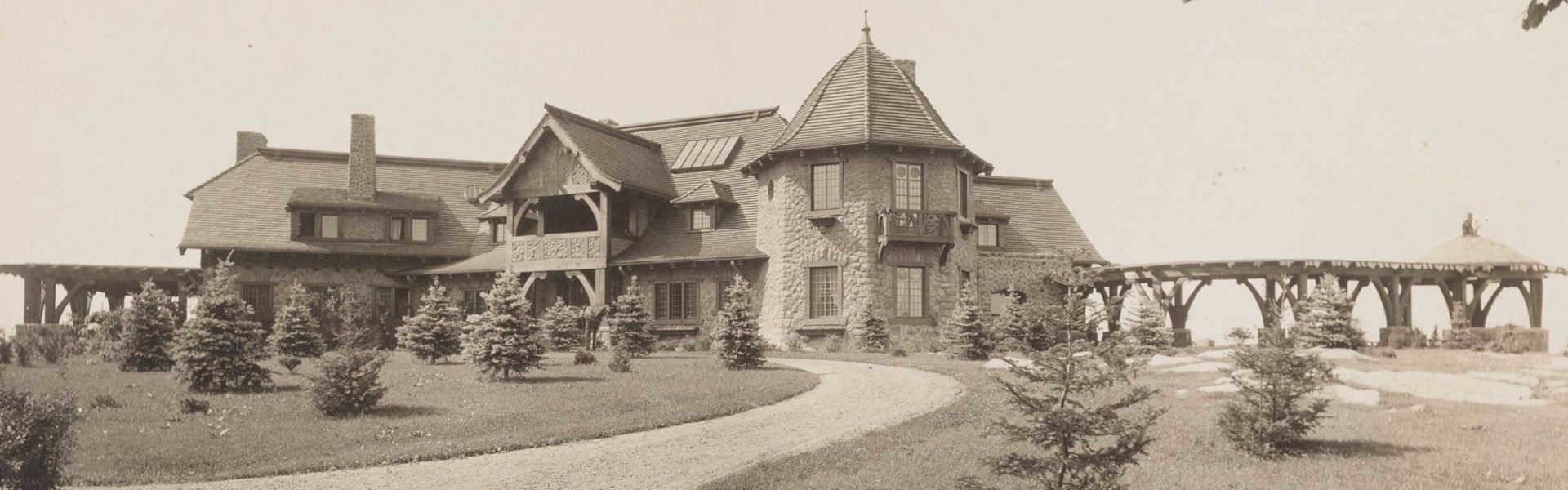
In December 2024, Castle in the Clouds and the Lakes Region Conservation Trust announced that the U.S. Department of the Interior had designated the Lucknow Estate as a National Historic Landmark. This esteemed recognition highlights the national significance of the Lucknow Estate for its remarkable architecture, landscape architecture, and conservation efforts spanning over a century.
What is a National Historic Landmark?
The National Historic Landmarks Program strives to preserve and protect our nationally significant cultural resources, A National Historic Landmark designation is the highest federal recognition of a property’s historical, architectural, or archeological significance, and a testament to the dedicated stewardship of many private and public property owners who seek this designation. While the National Park Service maintains National Historic Landmark listings, most are privately owned.
How is Eligibility Determined for National Historic Landmark Designation?
In order to be eligible for nomination as a National Historic Landmark, your property must be of national significance under one or more of the six National Historic Landmark criteria and retain a high degree of integrity.
Once you have determined that a property meets one or more of the six National Historic Landmark criteria – whether it is associated with significant events, significant people, great ideals, distinctive architecture or design, part of a historically significant district, or capable of yielding important information through archaeology – the next step is to evaluate its integrity. Properties must retain, to a high degree, the physical characteristics that allow them to clearly convey their historical significance. Even if a property is nationally significant under one or more criteria, it cannot be designated as a National Historic Landmark unless it also retains its integrity of location, setting, design, materials, workmanship, feeling, and association.
National Historic Landmark Program staff are available to help assess a property’s integrity, choose the most appropriate criteria, and craft a well-documented nomination that demonstrates both national significance and high integrity. They can also offer guidance on comparative analyses and help you prepare a successful submission to support the property’s recognition as a National Historic Landmark.
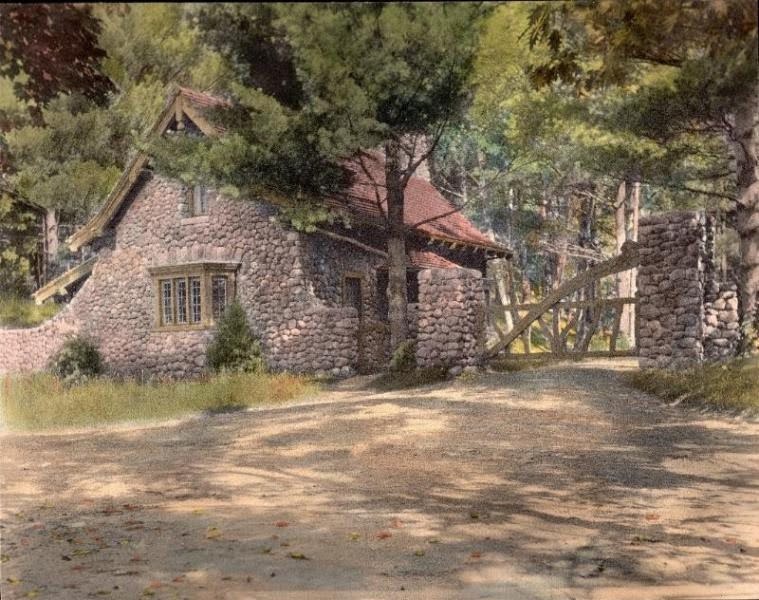
Lower gate lodge and gate at entrance to Brook Road.
From Olive D. Plant photo album, collection of Judith Newell, courtesy of Castle Preservation Society.
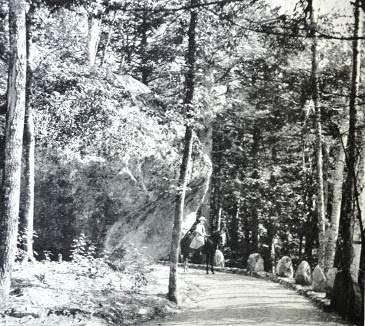
Brook Road as it passed close by The Pebble.
The Pebble was a giant landscape boulder that both Shaw and Plant drew visitors to. The road in this image was constructed by Plant and passes beneath it and was edged with standing boulders.
From “For Sale……” (1924 Sales Booklet).
What is the National Historic Landmark Nomination Process?
The National Historic Landmark nomination process usually takes between two and five years from start to finish. The process begins with a letter of inquiry, often submitted by a State Historic Preservation Officer, a Tribal Historic Preservation Officer, a Federal Preservation Officer, a scholar, a private owner, or an interested member of the public. National Historic Landmark Program staff then review this letter to determine if the property appears to meet one or more of the National Historic Landmark criteria. If the property shows potential for designation, National Historic Landmark Program staff provide guidance to help craft a formal nomination.
Once prepared, the nomination undergoes a thorough review by National Historic Landmark Program staff, subject matter experts, and scholars. After incorporating their feedback, the nomination is considered by the Landmarks Committee and then by the National Park System Advisory Board. Finally, the nomination is forwarded to the Secretary of the Interior, who reviews the recommendations and makes the official decision whether to designate the property as a National Historic Landmark.
What is Included in Lucknow Estate’s National Historic Landmark Designation?
Lucknow Estate’s National Historic Landmark designation covers more than 5,300 acres of the original 6,300-acre property built between 1913 and 1914 as a retirement retreat by shoe manufacturer Thomas Gustave Plant. The designation comprises virtually all the core estate as it existed during Plant’s era and reflects the vision Plant had from the outset as he focused his energy on these buildings, the inner landscape around them, and the expansive mountain landscape that frames the property.
Lucknow Estate was listed in the National Register of Historic Places in 2018 for national significance in the Areas of Architecture and Landscape Architecture. The estate is a premier example of the American Arts and Crafts movement, featuring an exceptionally intact ensemble that includes Lucknow Mansion, two gate houses, and an extensive road and bridle trail system linking seven mountain peaks.
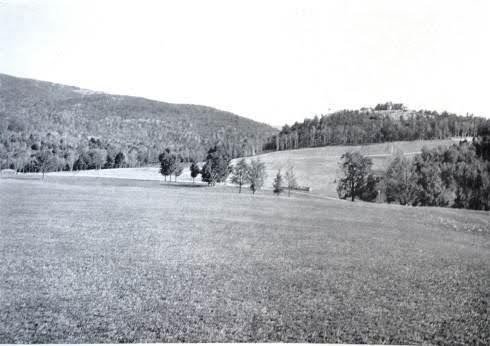
View of house from the earlier farm fields on which Plant overlay his golf course.
The Lee Family Cemetery, another survivor of that agrarian era, is in the middle of the image, slightly offset to the right.
From “For Sale……” (1924 Sales Booklet).
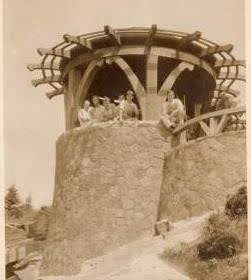
The gazebo under construction.
The gazebo site on a rocky outcrop ensured it blended into the landscape.
Collection of Bruce Reynolds, courtesy of Castle Preservation Society.
How Does Lucknow Estate Compare to Other Properties with National Significance?
Lucknow Estate is nationally significant as a rare and highly intact expression of the Arts and Crafts movement at the scale of a large, rural estate. Unlike most designated Arts and Crafts properties – which often focus on artisan workshops, Craftsman architecture, or urban examples – Lucknow combines rustic architecture, naturalistic landscape design, and a grand mountain setting. The integrity and scale of Lucknow set it apart even from comparable mountain estates like Grey Towers, Arden, and Flat Top Estate, all of which have suffered greater losses of historic acreage, integrity, or character.
By contrast, Lucknow retains nearly all of its core 5,294 acres and primary historic buildings and landscape features, protected by conservation easements that will preserve them in perpetuity. The distinctive combination of architecture, setting, and philosophy under the stewardship of Thomas Plant offers an unparalleled representation of the American Arts and Crafts movement and fills a significant gap among National Historic Landmarks dedicated to this period and style.
What are the Key Takeaways of Lucknow Estate’s National Historic Landmark Designation?
Lucknow Estate retains an exceptionally high level of historic integrity across all aspects, including location, design, setting, materials, workmanship, feeling, and association. Nearly all its original landscape features created by Thomas Gustave Plant remain intact, including the expansive trail and road system, stone walls and steps, garden terrace, reservoirs, and wooded slopes. Only a few primary elements, like the mountain-top observation towers and rustic bridges over Shannon Brook, no longer exist. The historic house, gate lodges, and stable/garage also retain a remarkable degree of authenticity, with the house still featuring much of its original furniture, fixtures, and finishes.
In addition to its extraordinary preservation, Lucknow Estate benefits from long-term protections. Conservation easements cover virtually all of its 5,294-acre property, ensuring that the historic landscape, structures, and acreage will be safeguarded and professionally managed for future generations. Even new additions to the property have been carefully designed to blend into the surroundings, preserving the estate’s visual character and significance.
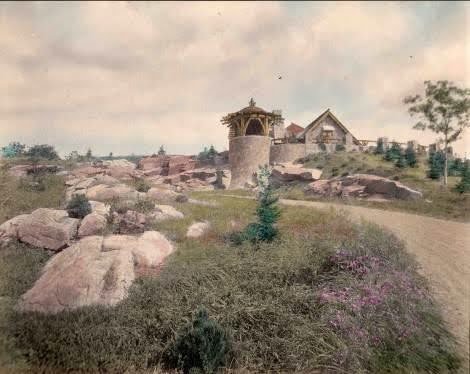
The approach to the house from the driveway.
Note the use of boulders and scattered plantings, rather than a formal landscape.
From Olive D. Plant photo album, collection of Judith Newell, courtesy of Castle Preservation Society.