100 Million Years Ago
Volcano erupts
Ossipee Mountain Range was once a volcano that geologists believe erupted right around the end of the Cretaceous Era.
Ongoing
Land Acknowledgement
We are gathered on the unceded land of the Abenaki peoples. I ask you to join me in acknowledging the Ossipee and Winnipesaukee Indigenous communities, their elders both past and present, as well as future generations. Castle Preservation Society also acknowledges that it was founded upon exclusions and erasures of many Indigenous peoples, including those on whose land this institution is located. This acknowledgement demonstrates a commitment to beginning the process of working to dismantle ongoing legacies of settler colonialism.
90 Million Years ago
Volcano erupts, again
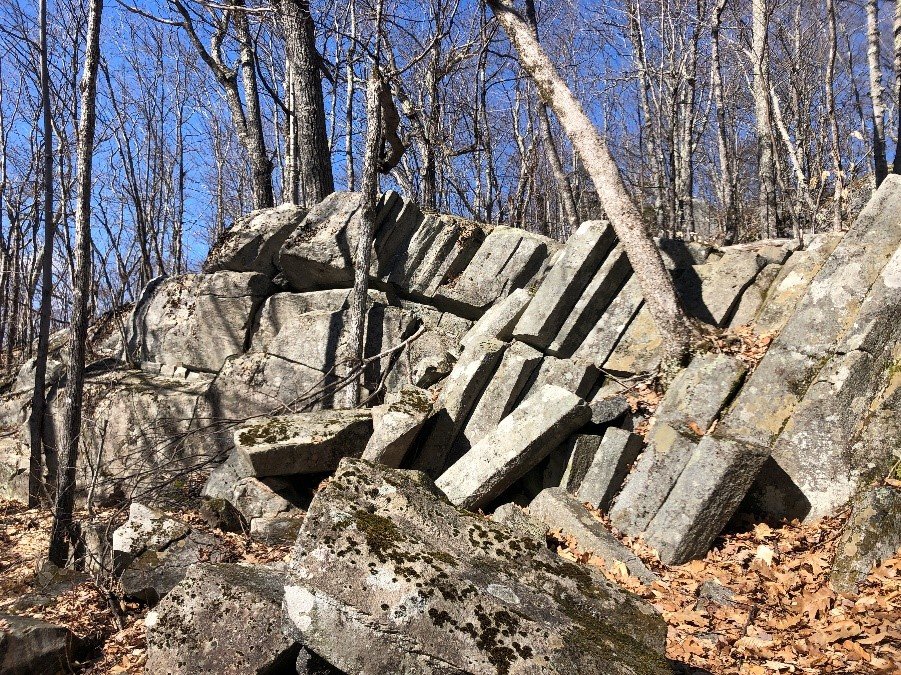
The volcano that is now the Ossipee Mountain Range erupts again, creating a geologically significant and unique circular mountain range. Also, as the lava dried it created 5 sided column structures that you can still find throughout the mountain range. This circular mountain range is one of only a handful found throughout the world, and continues to draw the attention of researchers today.
9000 BCE – 1725 CE
Indiginous Americans lived here
The Abenaki tribe was one of the major Indigenous tribes in New Hampshire. Within it, there were smaller tribes including the Winnipesaukee and Ossipee Tribes. Natives in these tribes lived throughout the land, using it for hunting, fishing, and sanctuary. Wigwam homes were built to create temporary and nomadic villages throughout the region. The Ossipee Tribe manned a stockade fort meant to help protect the Abenaki from the western Mohawk tribes. This fort was destroyed in 1725 and later rebuilt by Colonist Captain John Lovewell.
The Winnipesaukee Tribe is in part responsible for the fishing weirs that lend their colloquial name to Weirs Beach, as well as the name for the lake itself.
1790 – 1913

Moultonborough Mountain Community
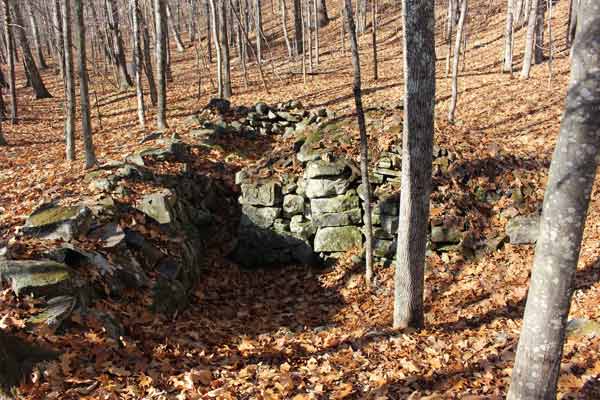
In the late 18th century, six families made their home on this plateau. The Lees, the Roberts, the Hornes, the Copps, the Whittens and the Whitmans formed a largely self-sufficient community. You can still see cellar holes throughout the property from where these homes once stood.
1879 – 1913
Ossippee Mountain Park
Benjamin F. Shaw, famous for the invention of the “Shawknit” seamless stocking, and the automatic loom for its production, saw this space as the perfect place for a summer estate. He was able to buy up most of the farm land from the Moultonborough Mountain Community (aside from the Lee Family’s 150 acres of land). Here Shaw built Weelahka Hall – his summer home, that rather resembled a small hotel. This home was surrounded by “The Lodge”, a single story annex, and numerous outbuildings. Shaw also constructed a five mile path system of bridges, and trails following Weelahka Brook (now Shannon Brook) and ultimately climbing to the summit of Mount Shaw. A mountain top observation pavilion, “The Crow’s Nest” and romantically named waterfalls on the property garnered the interest of guests including John Greenleaf Whittier and Lucy Larcom, as well as the general public. Popularity of the area eventually encouraged Shaw to charge admission, and require reservations to stay with him at Weelahka Hall. After Shaw’s death in 1890, his daughter continued to manage the property until it was sold to two sisters from New York who opted to continue running the park as a small resort.
1911 – 1941

The Plant Era
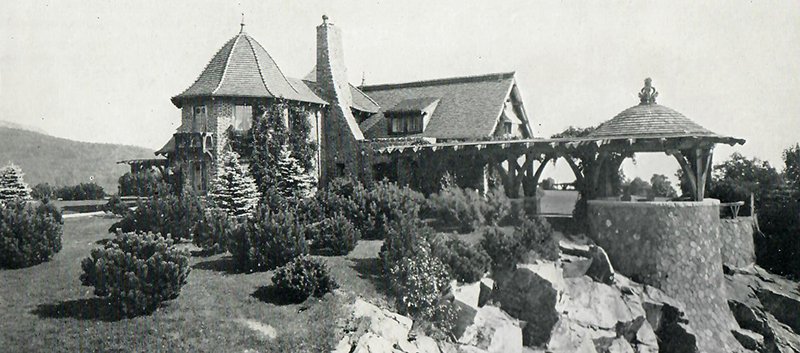
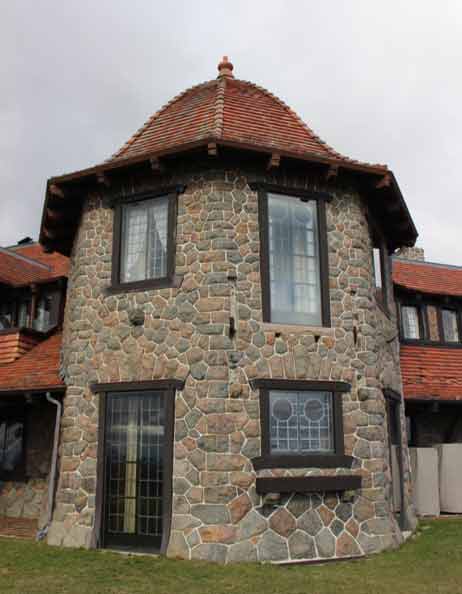
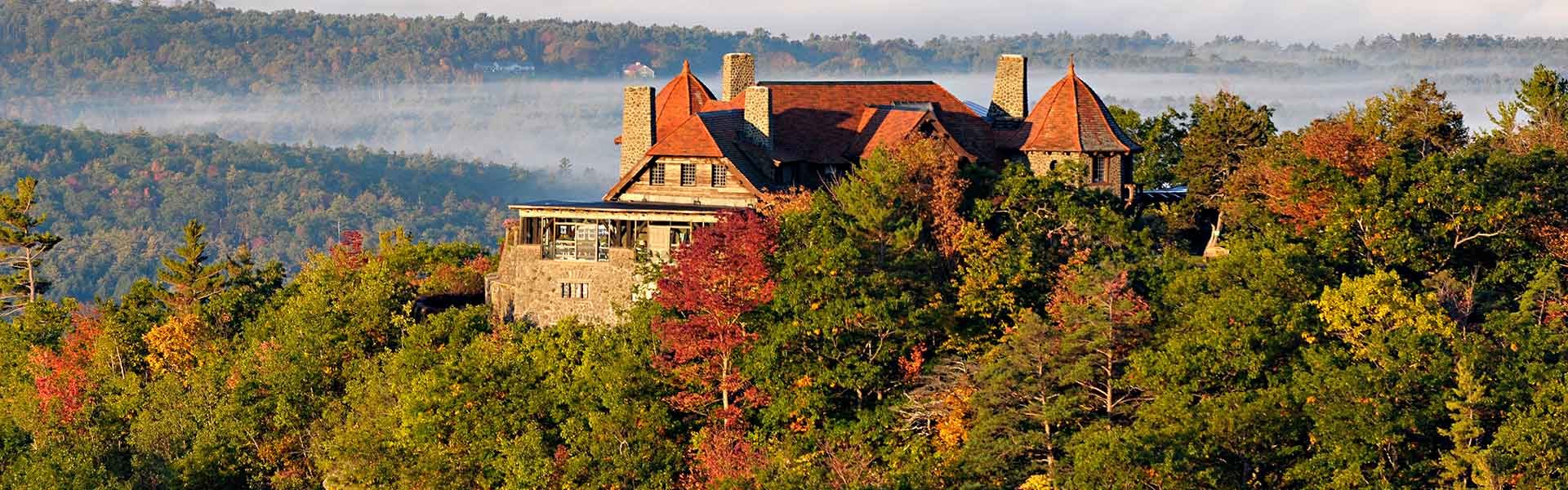
Tom Plant started purchasing the land in various parcels either directly or via his secretary or his brother, William Plant. He eventually owned some 6,300 acres of land spanning from the peaks of the Ossipee Mountain Range down to Lake Winnipesaukee, where he had between one and two miles of waterfront. Construction on his home started in 1913 supposedly comprising of over 1000 workers. Tom’s retirement estate, Lucknow, was comprised of his Arts & Crafts mansion, a stable/garage, several accessory buildings, a private lake, tennis courts and an 18-hole golf course.
Due to financial insecurities, Tom tried to sell the home in 1924 for $750,000. When unsuccessful in the sale, he mortgaged the property via his friend Joseph Emery. In 1941 both Emery and Tom passed away, forfeiting the home to foreclosure. Tom’s wife Olive was forced to leave with her personal belongings and return to her family home in Toulon, Illinois.
1912
Spite Fence
When the Lee family refused to sell their homestead lot to Plant, a “spite fence” was erected on Plant’s property, blocking their view. The fence, which was decorated with crude drawings and paint splatter is reported to have been 20 feet tall and extended several hundred feet.
1921
Bald Peak Colony Club
Bald Peak Colony Club opens in Melvin Village. The club, which Plant built hoping to attract a crowd of his peers to the area, included a golf course, allowing Plant to abandon the course he had previously developed on his Lucknow Estate.
1938
Hurricane
The 1938 Hurricane barrages New England, causing havoc and destruction to railways and roads. The hurricane flattened buildings and tore down trees. It significantly damaged the South Tower Balcony at Lucknow, resulting in the balcony’s removal. It wasn’t reinstalled until 2019.
1942-1956

The Tobey Era
Fred C. Tobey of Plymouth, NH purchases Lucknow Estate for the timbering opportunities. The Tobey Family used the home and property for their vacations and holidays.
1956-1991
The Robie Era
Richard S. Robie purchased the property from Fred Tobey. In 1959 he opened the property to the public, renaming it “Castle in the Clouds”.
1971

The Plants’ stable (called the Carriage House today) was converted to include spaces for a gift shop, kitchen and snack bar.
1973
Sugar House
The “Sugar House” was built and used to sell maple sugar products and other gifts. Today this building is used as a ticket office and gift shop.
1991-2002
The Sticht Era
J. Paul Sticht purchases Castle in the Clouds from the Robies with the intention to bottle water. He opens Castle Springs water bottling, a micro-brewery named Lucknow, and continues to run Castle in the Clouds as a public attraction. In 2001 he signs a Purchase and Sale agreement with Lakes Region Conservation Trust for Castle in the Clouds and surrounding acreage, except for a parcel of land that was separated and sold to C.G. Roxanne to continue bottling water.
1991
Construction begins on the Castle Springs water bottling plant at the top of Ossipee Park Road in October.
1992

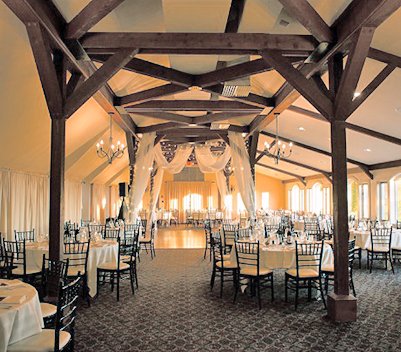
The second floor of the stable (today’s Carriage House) is converted to event space with windows installed to view scenic Lake Winnipesaukee. Today we call it the Winnipesaukee Room.
1996
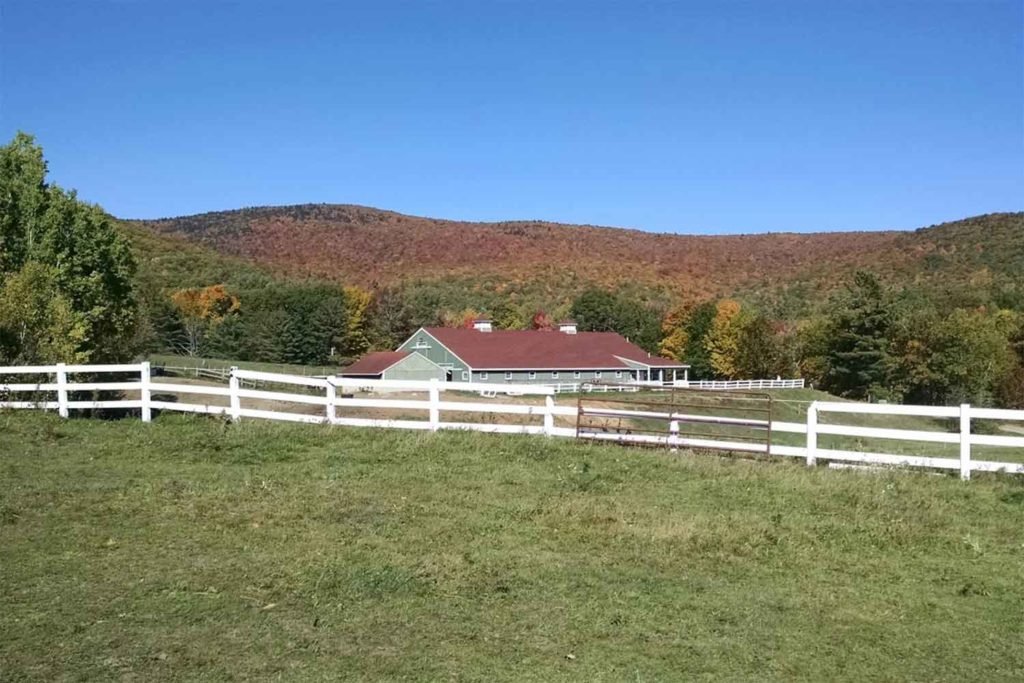
Construction begins on the modern horse barn in May.
2002-2010
Lakes Region Conservation Trust
In 2001, Lakes Region Conservation Trust (LRCT)’s director Tom Curran presented to the board the opportunity to purchase Castle in the Clouds, and its surrounding 5,300 acres for $5.9 million. After a long discussion, and miraculous fundraising, LRCT finalized the purchase of the property in December, 2003. 2004 was the organization’s first full season operating Castle in the Clouds. After two seasons, LRCT realized they needed assistance in managing the historic house. After exploring and exhausting options of selling, leasing and donating the property to other nonprofits, it was determined that a handful of Castle-focused LRCT board members would diverge to form the Castle Preservation Society.
2006- Present

The Castle Preservation Society
In February 2006, LRCT tentatively approved the proposal and creation of Castle Preservation Society (CPS), putting the work in motion. In November 2006, CPS was an IRS approved 501(c)3 non-profit organization. Continuing to work with LRCT, CPS took over the management of the immediately surrounding 135 acres of land, and titles to the Mansion, Carriage House, Lower Gate House, and a storage building.
2018
The Lucknow Estate was added to the National Register of Historic Places.
2024

National Historic Landmark
Lucknow Estate is designated as a National Historic Landmark.